Hear every patient and every care team. With two short questions.
Screver gives hospitals, clinics, rehab centres and care homes one platform for patient and employee feedback – a few short questions at the right moment, simple enough for older patients, with results your teams see the same day.

Patient feedback without paper
Replace the paper form at reception with one or two questions by QR code on the ward, on a tablet or by email after discharge – results land in a live dashboard per ward and location.

Care teams that stay
Short, anonymous check-ins for nursing, medical, therapy and support staff show workload and leadership pressure points before people leave.

Visible proof of quality
Turn patient voices into evidence for quality management, referrers and the canton – and invite satisfied patients to share their experience in a Google review.











Feedback that fits the patient journey
Ask one or two short questions at the moments that matter – at admission, at discharge, after an outpatient visit or a week after rehab. Patients answer by QR code on the ward, on a tablet at reception or by email, in their own language. Every answer is linked to the ward, location or treatment, so teams see where satisfaction rises or falls – and satisfied patients are invited straight to a Google review.
Outcomes and experience, as patients see them
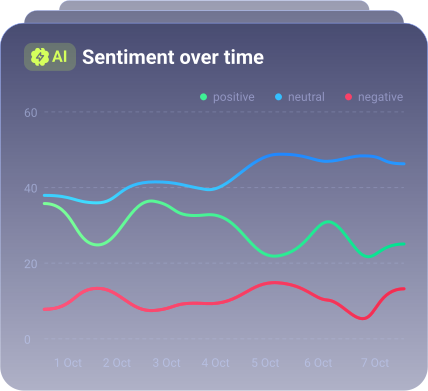
Patients can tell you two things: how their health is changing – pain, mobility, quality of life (PROMs) – and how they experienced the care itself – communication, waiting times, feeling taken seriously (PREMs). Screver asks both at the right points of the treatment path, anonymously or linked to a case number, and turns the answers into reports for quality management, referrers and cantonal requirements – without paper or spreadsheets.
Built for the surveys hospitals and clinics already run

Stay & discharge feedback
A few short questions at discharge on care, communication, food and rooms, compared by ward and location.

Outpatient visits
Check-in and check-out questions before and after the appointment show which step of the visit to improve.

Rehab & therapy
Scheduling, accessibility and therapy quality across inpatient and outpatient rehab, in one survey.

Emergency department
A few fair questions that fit a stressful situation, sent after the visit – not a long form.

Referring physicians
How GPs and specialists experience referrals, reports and communication with your clinic.

Care homes & relatives
Simple feedback from residents, relatives and care teams, without long questionnaires.

Employee pulse & satisfaction
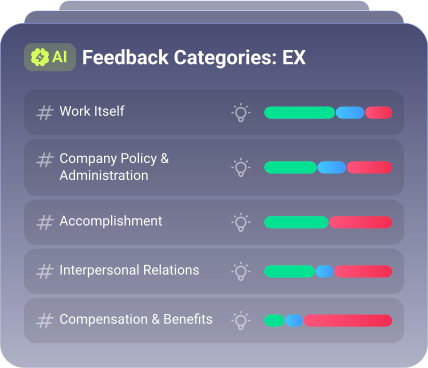
Workload, leadership and coping with stress by department and age group, anonymous and repeatable.

Onboarding & exit
See early where new nurses and doctors struggle, and why experienced colleagues leave.
Care teams who feel heard stay longer
Short, anonymous surveys for nursing, medical, therapy, hotel and administrative staff show workload, leadership and stress by department and age group. Employees choose the topics they want to answer, results are ready in days, and the analysis shows what drives the wish to stay – such as feeling valued at work.
Our approach to Hospitals & Care
step 1

Co-Develop & Pilot – Start small, test fast, prove value
We start small – one ward, one clinic or one discharge question – and show results within weeks.
step 2

Refine & Align – Optimize workflows and metrics before scaling
We align questions, languages and reporting with quality management, nursing and HR before rolling out more widely.
step 3

Scale across locations
Add wards, locations, staff surveys and referrer feedback on the same platform, with results you can compare year after year.
Want to hear your patients
Tell us how you collect patient and employee feedback today – on paper, in a yearly survey or not yet at all – and we will show you a simple start in one ward or clinic.
Screver IQ Resources



“A congress isn’t just an event; it’s the start of a relationship. Using Screver, we turned every interaction into a moment to listen, engage, and prepare better for each launch.”
