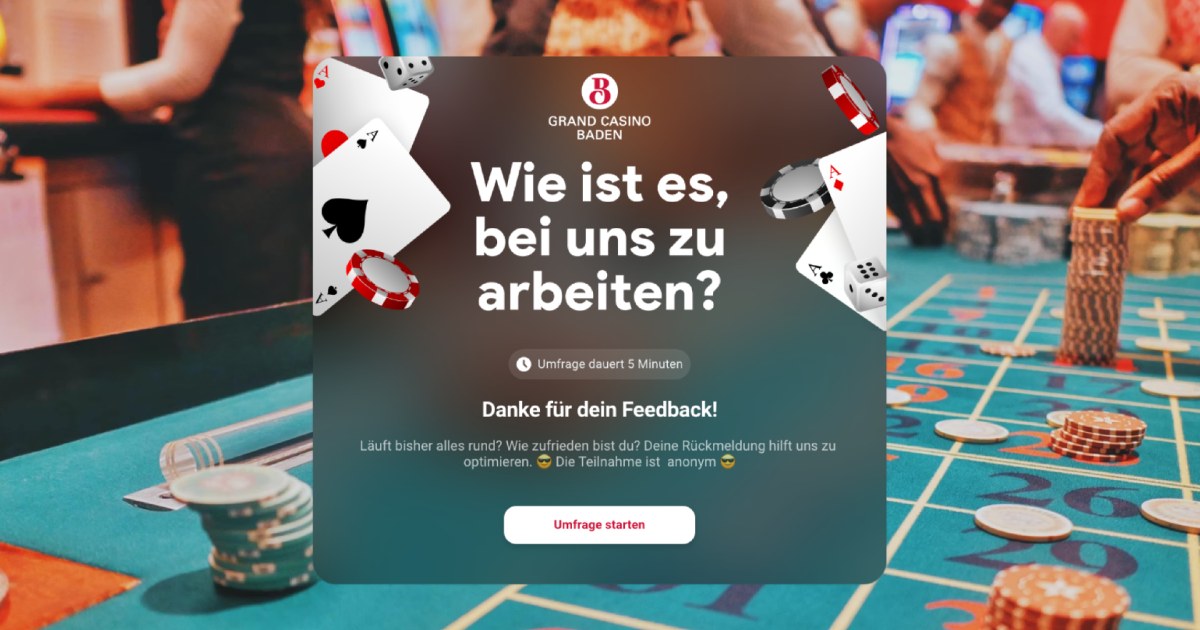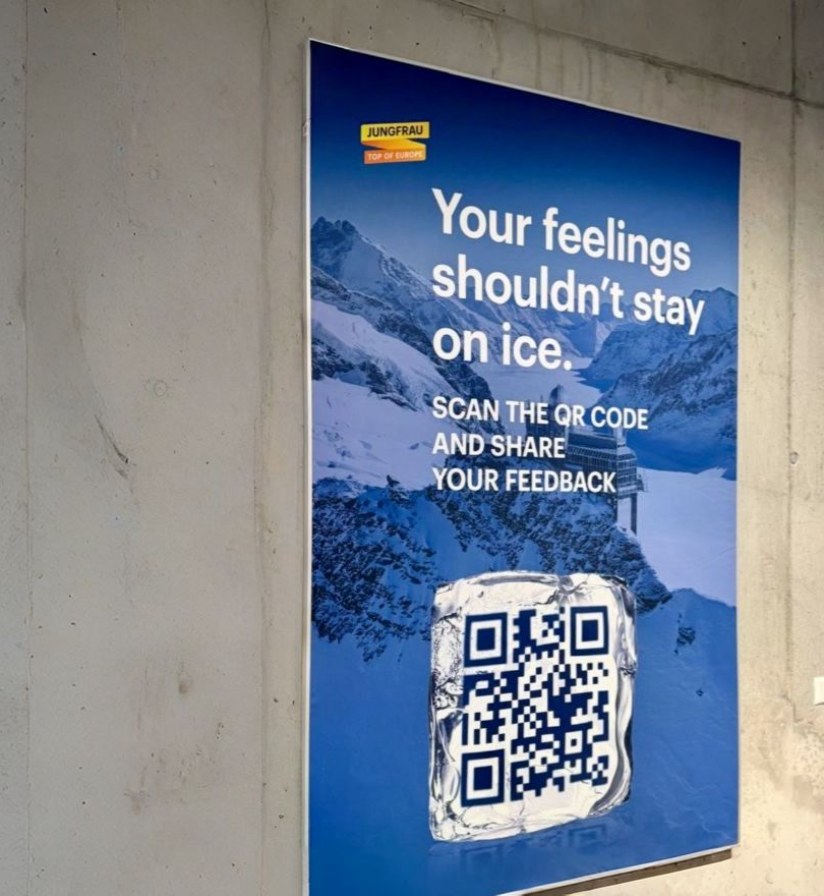
Europa-Park Resort – Germany's largest theme park, with 6 million guests a year – runs its online guest research on Screver and links it with behavioral data in its own data stack. In his keynote at The AI & CX Hype Bubble in Zurich on 13 June 2025, Pascal Weller, Business Intelligence & Research Lead at Europa-Park, showed how about 250,000 completed surveys in two years feed Tableau dashboards, and how a new on-site survey for conferences and events went live in about a month.
Europa-Park's guest feedback program in numbers
- 6 million guests a year at Germany's largest and Europe's second-largest theme park
- About 8 in 10 guests come back – a KPI Europa-Park tracks closely
- About 250,000 completed surveys in the first two years on Screver
- 30+ post-stay surveys running across the resort
- 50+ conference and event rooms now covered by quick on-site feedback via QR codes
- About 1 month from idea to live on-site survey; the needed data export was added in a couple of days
- A team of around a dozen for customer relationships and data, plus data engineers
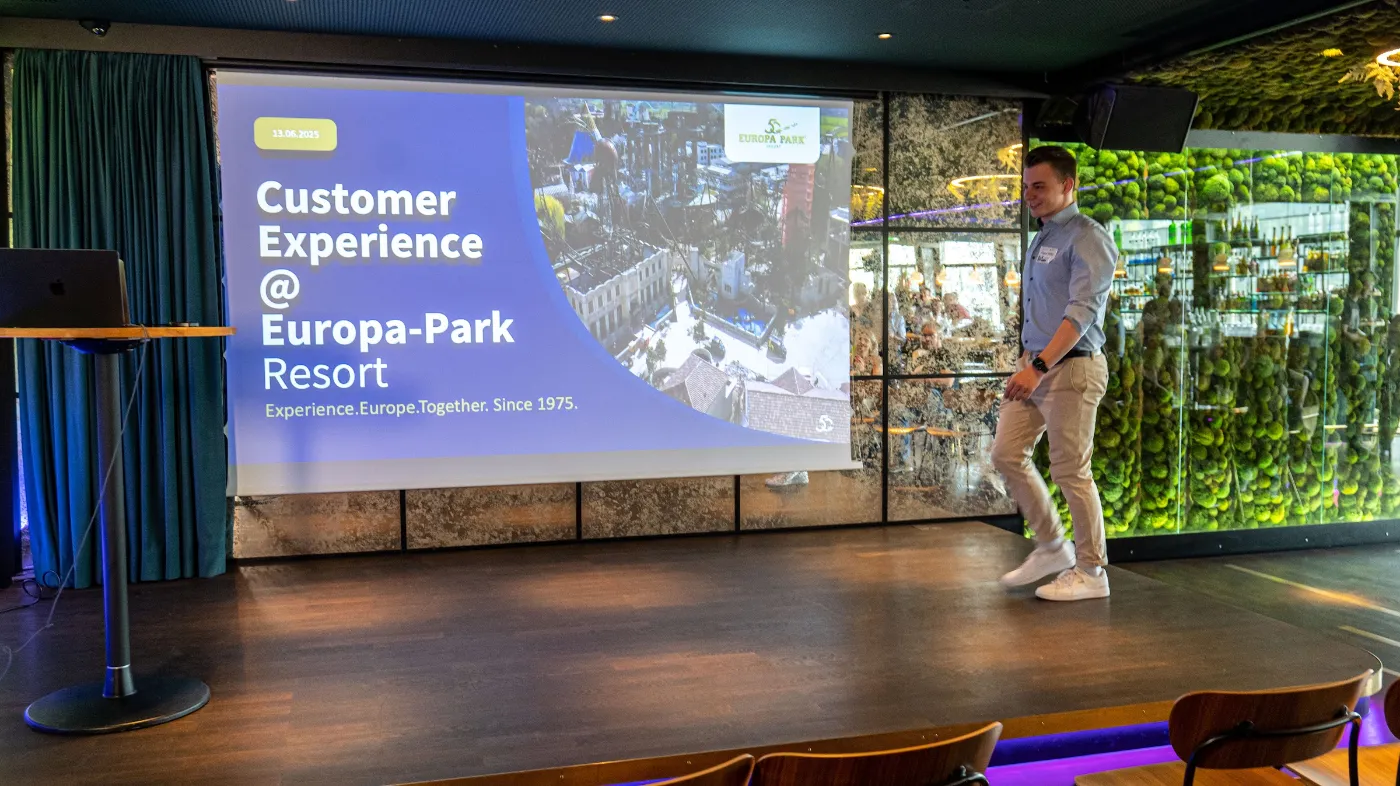
"We're not selling tickets, we're selling emotions – and time with the family." – Pascal Weller, Europa-Park
Why Europa-Park needs fast, connected guest feedback
Europa-Park Resort is far more than a theme park: it includes the water park Rulantica, more than six hotels with over 5,000 beds, fine dining, conferences and events, and a family-owned group of companies that builds rides, films and VR attractions. About 8 in 10 guests come back, so loyalty is the KPI that matters. Families are the core target group, which means Europa-Park balances revenue against value for money every day – and needs to know what guests really want, not what looks good internally.
Face-to-face interviews still run on 10% of opening days, where every 100th guest is asked at the exit. They give consistent long-term data but are slow and expensive. Management needed insights faster and in one place – along the whole customer journey, exactly when they are needed.
How Europa-Park connects Screver with its data stack
After evaluating many tools, Europa-Park chose Screver for online guest research. The goal was not to run surveys for their own sake, but to link research data with behavioral data and make it part of the existing data stack.
- Invitation: survey links go out in the newsletters and customer journey emails sent from SAP marketing tools, timed to fit the guest journey
- Survey: guests answer branded Screver surveys online
- Integration: the Screver API feeds the answers into Tableau, where they are analyzed together with weather, visitor numbers and other factors; Alteryx prepares the data
- Customer 360: dashboards show not only the last purchase, but also newsletter opens and the last complaint of a guest
- One BI system: social listening, Google reviews and survey data come together in one place, so managers don't need 15 links and 30 reports
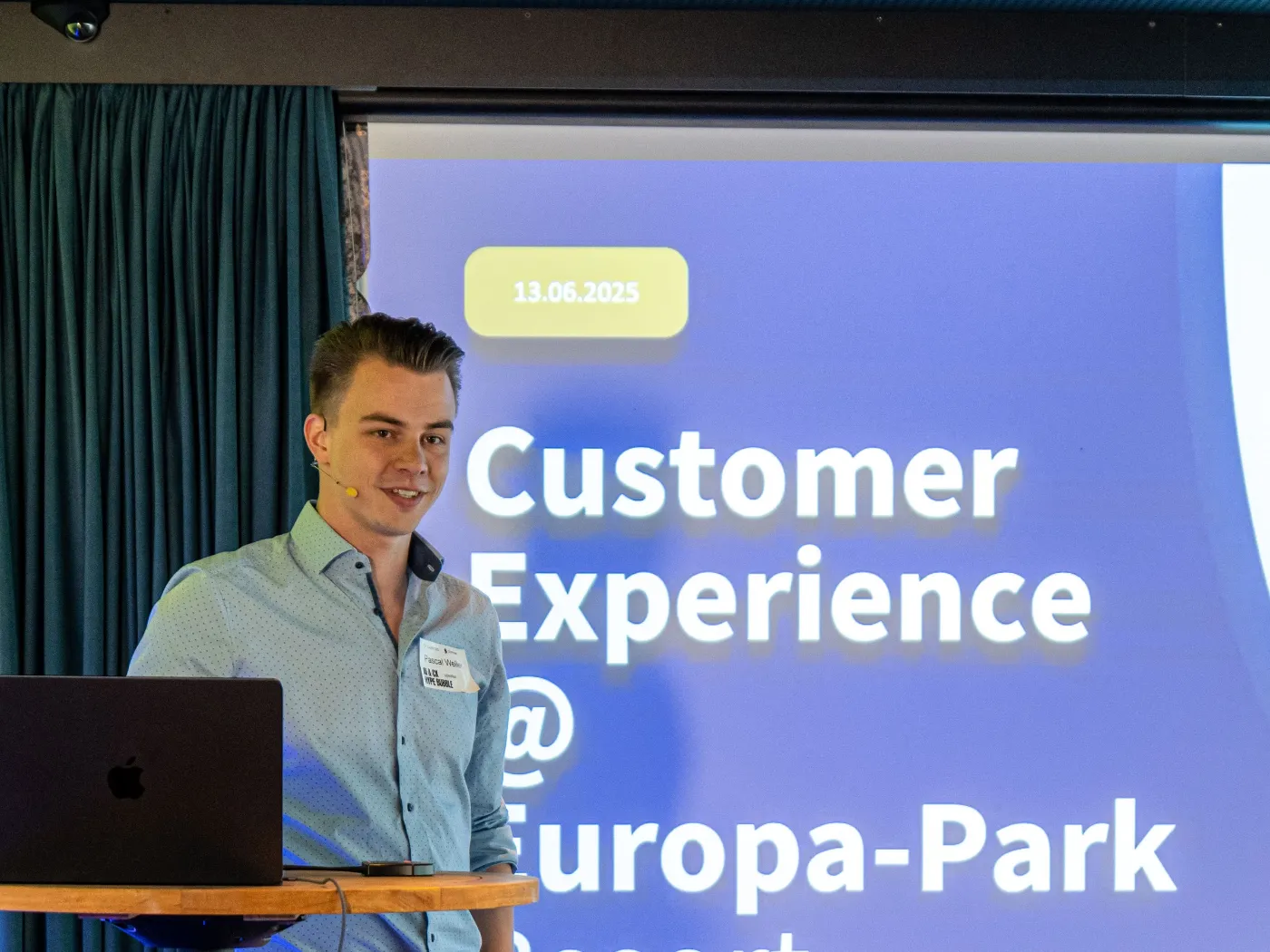
Use case: room-level feedback for Europa-Park's conference and event business
Under the name Confertainment, Europa-Park rents more than 50 rooms for everything from overnight meetings to the Miss Germany gala and the Nickelodeon Kids' Choice Awards. The project started with a rumor in the hallway: staff said the projector in one room never worked properly, and that management did not believe them.
Europa-Park brought everyone involved in events together and built a short on-site survey with the Screver team:
- About six questions on food and beverage, technical equipment and staff, plus NPS
- QR codes per room, so guests don't need to know the room name; targets and tags in Screver map each answer to the right hotel and area
- Daily targeted emails to each manager, showing only their responsibility, with links into Tableau dashboards
- Room comparisons show whether a room keeps falling behind – data instead of hallway rumors
The whole project took about a month. Screver added the needed data export in about two days.
"Doing things fast at some point will lead to doing things twice." – Pascal Weller, Europa-Park
How Europa-Park approaches AI in customer experience
Europa-Park stopped at least four AI projects that adopted technology because it was new, not because it solved a problem. Its approach: legal and internal guidelines first, then a strategy, then AI agents built on one single source of truth – so that an HR chatbot and a customer service chatbot never give different answers from different databases.
What other leisure and hospitality companies can learn from Europa-Park
- Link survey data with behavioral data – satisfaction means more next to weather, attendance and purchases
- Bring insights to one BI system instead of adding another tool to log in to
- Start from the business problem – the event survey began with a complaint about one projector
- Keep on-site surveys short and route results to the person responsible, daily
- Build the data foundation before AI – one source of truth, then agents
Transcript: guest feedback at Europa-Park, in Pascal Weller's words
Edited for readability from the keynote recording. Speaker: Pascal Weller, Business Intelligence & Research Lead, Europa-Park.
Europa-Park Resort at a glance
We are talking about Europe's second-largest, Germany's largest and most visited theme park, with 6 million guests per year – but also much more. We have our water park, which has been in place for more than five years, Germany's largest hotel resort with more than six hotels and more than 5,000 beds, fine dining, and VR escape rooms that are played as far away as cruise ships and Mexico. We have grown historically and we are still very proudly a family-owned business. That means we still overcome challenges of our past on a daily basis – legacy systems and structures that need to change over time.
An important KPI is our share of repeat visitors – about 8 in 10, and we keep tracking them. We believe in high quality standards, constant innovation and a clear focus on what guests want – ignoring our own ego, which is sometimes hard when you design a fantasy world. We also keep an eye on value for money. With dynamic pricing we could just maximize profit, but that would harm the families we build our product for.
Building the data team
After COVID, data became even more important. I started alone, and I am now fortunate to co-lead a team of around a dozen people that is responsible for everything that strengthens our customer relationships. We cannot do all the research for our entire group of companies, but we can provide the platform – also for B2B use cases, for example to check whether a client is happy with how a roller coaster was produced. We try to move the whole company along the data maturity curve: first getting and organizing the data, then understanding what happened and why. To create that solid base, we hired two data engineers.
Face-to-face and online research
We started in the 1980s with a very strategic approach. Face-to-face monitoring is still used – it might be expensive and slow, but it gives consistency. On 10% of opening days, every 100th guest is asked at the exit. Online research has been the strategic pillar of the past two years. We evaluated a lot of tools and chose Screver, with a clear set of goals: link our research data with behavioral data, integrate it with the rest of our data stack, and have insights along the customer journey exactly when they are needed.
From newsletter to Tableau
We send our newsletters and campaigns from our SAP marketing system and include the survey links where they fit the customer journey best. Guests reach the online survey, and we integrate the answers into our reporting system, Tableau, using the Screver API. That lets us see not only how happy guests are, but how that correlates with weather, the number of guests and other factors. We now have customer 360 dashboards that show not only when you last bought, but whether you opened the last newsletters and what your last complaint was. Next year we introduce a new CRM, so that a service agent or AI can profit from data whose quality we trust. Doing things fast at some point will lead to doing things twice, so we go one step at a time.
One system for the end user
For us, CX is not only online surveys. We use social listening, we get Google reviews and feedback on numerous platforms. Behind the boxes of our data stack there are more than 50 systems delivering more or less messy data. Our managers don't want 15 links and 30 reports – they see one BI system with everything in place.
Confertainment: feedback per conference room
Confertainment combines conference and entertainment. We have more than 50 rooms that can be rented, from an overnight meeting to the Miss Germany gala and the Nickelodeon Kids' Choice Awards. The project started with complaints and rumors on the floors about a projector in one room, and the feeling that the bosses never believed the staff. We brought all the people involved in these events together and understood that they need strategic feedback over time, but also operational feedback on the spot.
We had about 250,000 finished surveys in the two years we have used Screver, and a bit more than 30 post-stay surveys running – but this was a first. It is a very short survey with about six questions on food and beverage, technical components and staff, plus NPS. We use the target and tag features for our hotels and areas, because rooms can be five kilometers apart and have different managers. Guests don't know the room name, but they have the QR code. We needed one more data export, and Screver added it in about two days. The whole project took about a month. Managers now get daily emails for exactly their responsibility, with a link to the Tableau dashboards, so they can see whether a room is always behind the others.
AI: value first
We had to stop at least four projects that adopted technology because it was cool. If we have five different chatbots that query different databases, the customer is confused and we create more work. We have finished our guidelines from a legal and internal perspective, and we now aim for a strategy with agents that share one source of truth.
Data culture
Data has to be lived in the company. Acceptance grows by showing value – a dashboard, an ROI, measuring success and failure. And culture eats strategy for breakfast: a food and beverage outlet manager can only plan staff well if he has the data he needs. In the end, we're not selling tickets, we're selling emotions and time with the family. We drew our journey as a mosaic of touchpoints, and our goal is to cover as many tiles as possible.
Frequently asked questions
How does Europa-Park collect guest feedback?
Europa-Park combines face-to-face interviews on 10% of opening days with online Screver surveys sent along the customer journey, 30+ post-stay surveys and QR-code surveys in its conference and event rooms.
How is Screver connected to Europa-Park's data stack?
Survey links go out in newsletters sent from SAP marketing tools, and the Screver API feeds answers into Tableau, where Alteryx and other sources combine them with weather, attendance and customer data.
How fast can an on-site feedback survey go live?
At Europa-Park, the room-level survey for conferences and events went live in about a month, including daily manager emails and dashboards. See how Screver supports leisure and entertainment companies.
Where can I find the other keynotes from the event?
See The AI & CX Hype Bubble – Zurich 2025 for all client keynotes, including MSD, Zillertal, ewz and MS Sports.
Source: keynote recording on the Screver YouTube channel. Published: 18 November 2026.