Core7+ Engagement IQ. Measure what really drives engagement.
Core7+ Engagement IQ is Screver's employee engagement methodology. It separates hygiene factors from true motivators, tracks 11+ drivers with a baseline survey and monthly pulses, compares every team with benchmarks and shows where to act first.

11 drivers, 70+ subdrivers
80+ pulse questions grouped into the drivers that build commitment.

Benchmarks built in
Compare each team with science-based benchmarks, with other units and with its own earlier results.

Action priorities by team
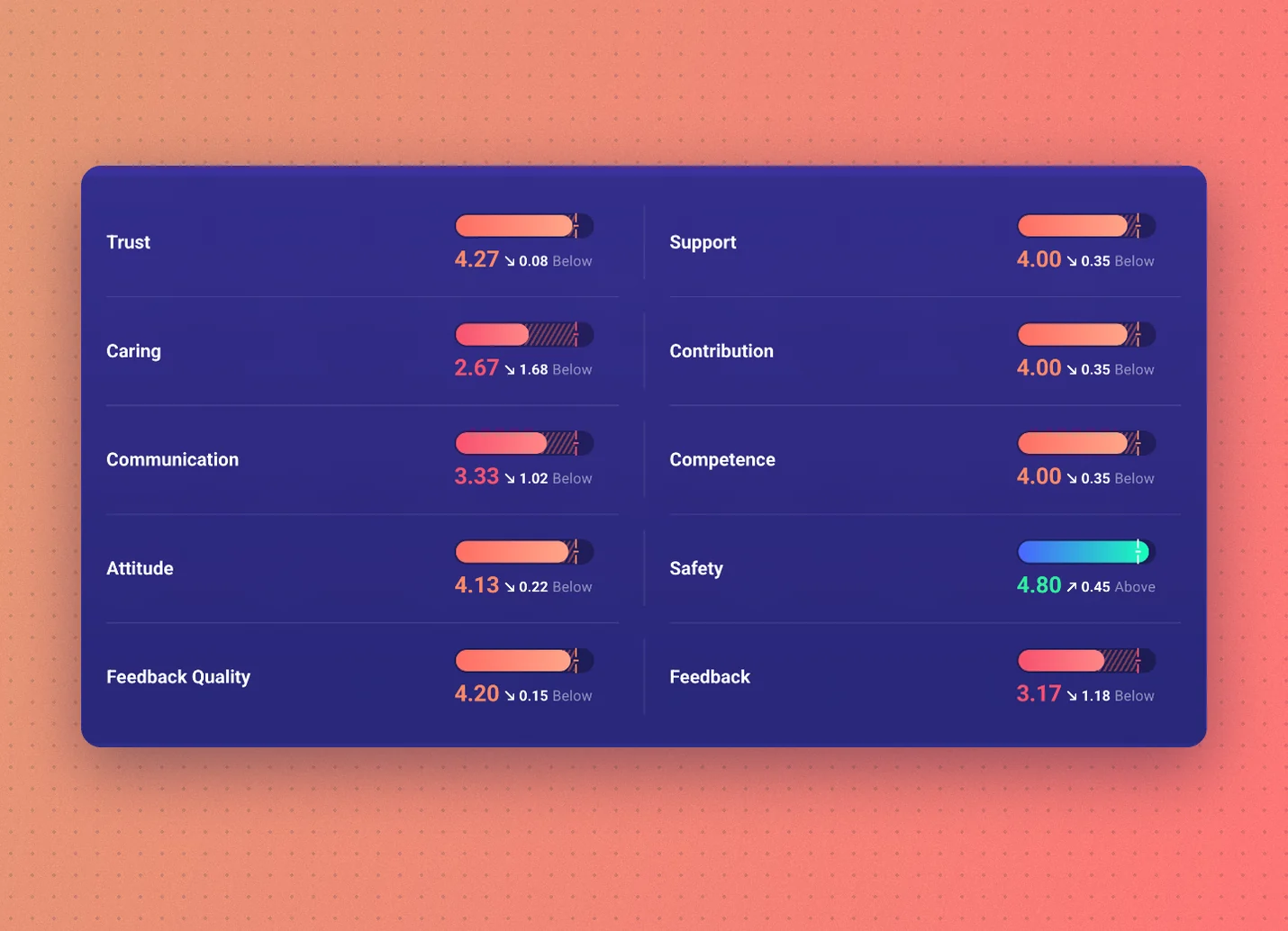
After every pulse, HR and leaders see which drivers to improve first.
What is Core7+ Engagement IQ?
Core7+ Engagement IQ is Screver's own engagement model and the survey framework behind Screver's employee programs. It separates hygiene factors from motivators and groups 80+ pulse questions into 11 core drivers and 70+ subdrivers. Results are segmented by team, role, location and tenure, so every leader sees where to act.
Hygiene factors and motivators – what is the difference?
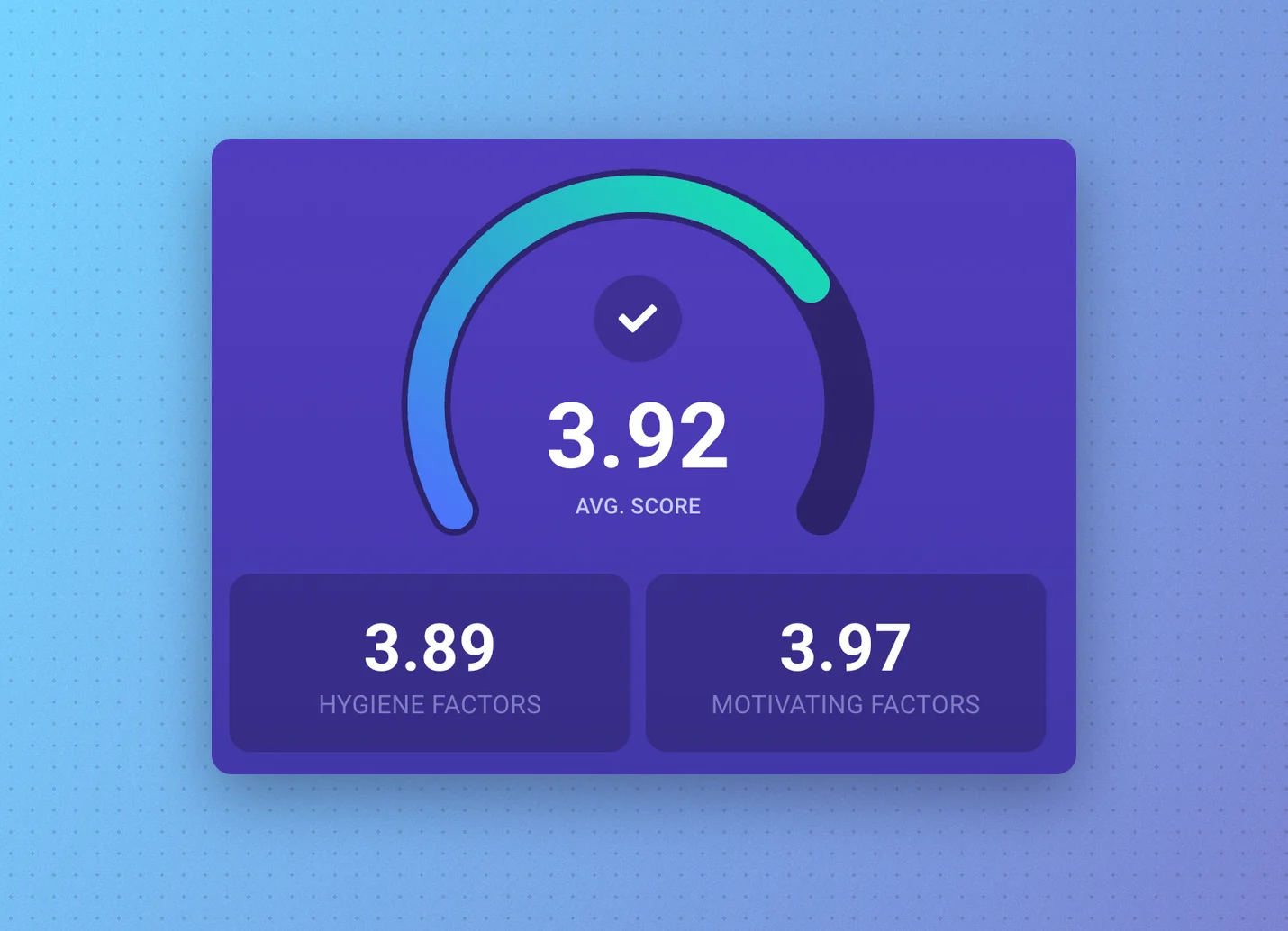
Hygiene factors – company policies, supervision, working conditions, compensation and benefits, interpersonal relations – prevent dissatisfaction, but rarely create engagement on their own. Motivators – achievement, recognition, the work itself, responsibility, advancement and growth – build real commitment. Core7+ measures both and can add custom drivers for your organisation.
Which drivers does Core7+ measure?
Core7+ is Screver's own engagement model. The name stands for seven motivators: six core motivators plus a seventh, custom factor that we define specifically for each company. Five hygiene factors complete the model. 80+ questions are grouped into these drivers; each driver is split into subdrivers, measured with short statements on a labelled agreement scale. The chart shows how strongly each driver moves engagement.
Fig. 1 – How strongly each Core7+ driver moves engagement. Bars to the left: how much dissatisfaction a driver causes when it is missing. Bars to the right: how much satisfaction it adds when it improves. Pay mainly prevents dissatisfaction; achievement, recognition and responsibility – shaped day to day by leaders – build commitment. The 7th driver is custom: we define it specifically for your company. Illustrative pattern, not client data.
How do benchmarks and reporting work?
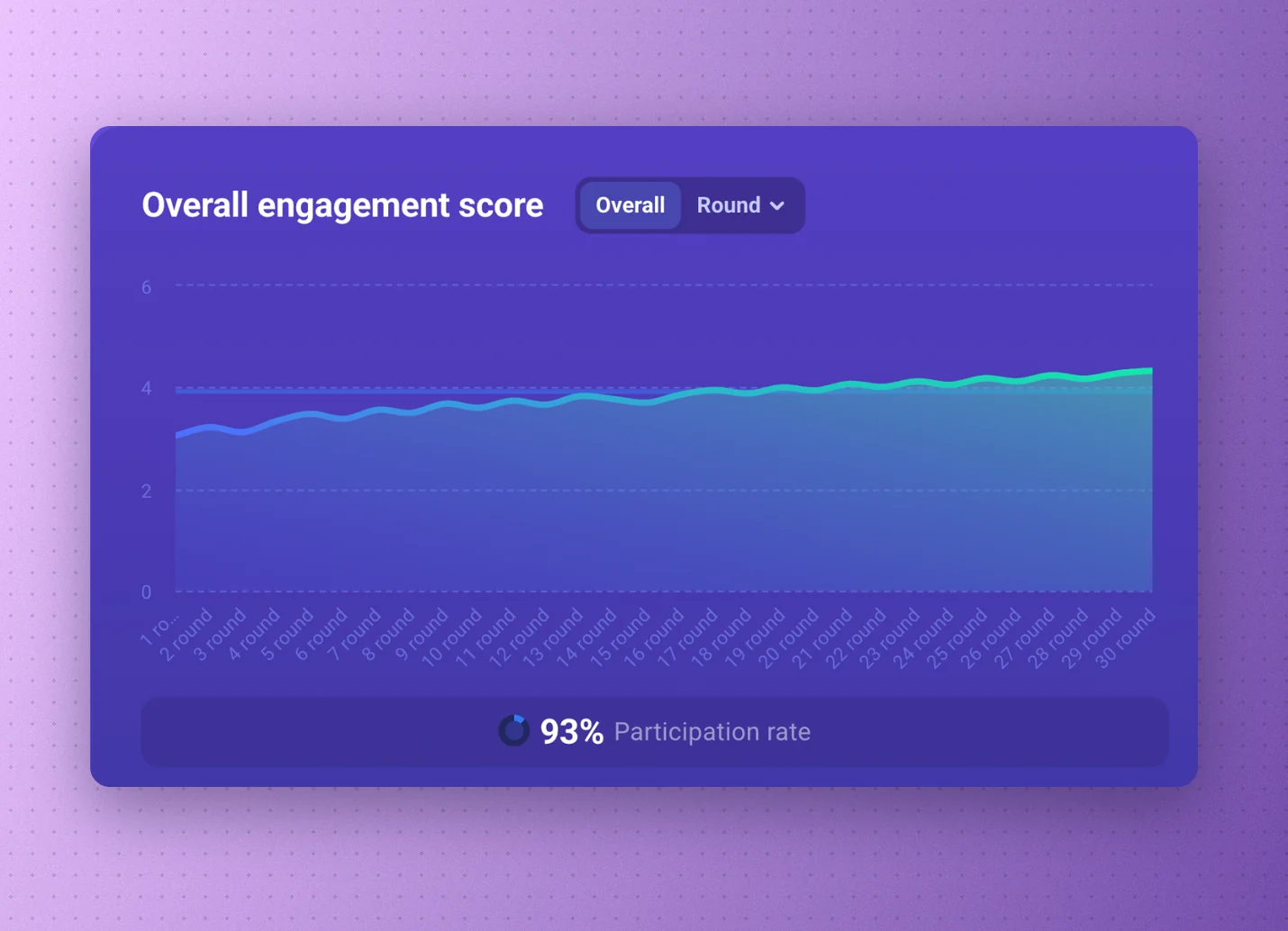
Results arrive in real time on role-based dashboards for HR, managers and leadership, segmented by department, location, role, tenure and hierarchy. Every score can be compared with benchmarks and over time.
- Science-based benchmarks for engagement drivers and eNPS
- Internal benchmarks by unit, site, team, cohort or phase
- Trends across the baseline and every monthly pulse, with heatmaps
- AI sentiment analysis, auto-tagged themes and early warning signals for declining engagement
Employee engagement examples. From real programs.
1/3

Spital Thurgau
Pulse surveys instead of annual questionnaires
Klinik St. Katharinental at Spital Thurgau replaced annual staff questionnaires with short, department-level pulse surveys to spot concerns early and act on them. «My vision is to create a working environment where employees feel valued, supported, and fulfilled.» – Dr Stefan Goetz, Klinik St. Katharinental
Read the Klinik St. Katharinental story300+
of around 330 employees took part in the first pulse
2/3

Grand Casino Baden
An employee survey people finish
Grand Casino Baden replaced its standard employee survey with a branded, playful one – now a recurring program in Baden and Locarno, with an exit survey for leavers. «The survey feels fresh and modern – it is really fun to look at and to analyze.» – Jannine Hodel, Stadtcasino Baden Group
Read the Grand Casino Baden story4
survey rounds in 2 casinos and 2 languages
3/3

Energy Vault
Employee listening from hiring to departure
Energy Vault's People Ops team ran around a dozen surveys on Screver between 2022 and 2025, across the US and Europe, covering stages from hiring to departure.
Read the Energy Vault story11
engagement drivers agreed in a workshop
Related solutions
Employee Engagement
Engagement and pulse surveys people finish.
Employee Experience
Employee listening from onboarding to exit.
Analytics & Insights
Role-based dashboards and AI sentiment analysis.
AI Agents for Employee Engagement
Monitors shifts in employee themes like workload, leadership, recognition, career growth or team climate – and alerts HR and the right manager before issues spread.
Delivers a one-page summary of top positives, negatives, and trends from the surveys.
Detects repeated negative comments about sites, teams, products, materials or training – and sends structured alerts to the team that owns the issue.
Baseline, pulse, repeat monthly.
step 1

Month 1 – Baseline survey with 15–25 questions
A short baseline survey sets the starting point for every team, site and role.
step 2

Month 2 – Full Core7+ pulse with 40–80 questions
The full pulse measures all drivers and subdrivers, compares results with benchmarks and sets the first action priorities.
step 3

From month 3 – Automated pulses with 6–8 questions
Short, rotating pulses track change every month, with real-time analytics plus half-year and annual reporting.
Questions we actually get asked
Didn’t find your answer?
Write to usWhat is Core7+ Engagement IQ?
Screver's own employee engagement methodology. It separates hygiene factors from motivators and measures 11 core drivers and 70+ subdrivers with a baseline survey, a full pulse and short monthly pulses, so HR sees what drives commitment in each team.
Which benchmarks does Core7+ use?
Each team is compared with science-based benchmarks for the Core7+ drivers and eNPS, with other units, sites or cohorts, and with its own earlier pulse rounds. Benchmarks can also be set by phase or training cohort.
How are Core7+ questions written?
Effective surveys are built around decisions, not questions. Core7+ applies validated principles from psychometrics, behavioural science and organisational psychology: each question measures one concept, the wording describes observable behaviour (“I receive feedback every week”), and balanced, labelled answer scales keep results comparable across teams and over time.
How do results turn into action?
After each pulse, Screver shows which drivers each team should improve first, with insights from correlations and deviations and recommendations per segment for HR and leadership. Teams agree on one or two actions and check progress in the next pulse.
How are open comments analysed?
AI sentiment analysis reads every open comment, tags the main themes and flags early warning signals, so HR teams do not have to read thousands of comments by hand.
How long does it take to start?
The baseline survey runs in the first month and the full Core7+ pulse in the second. From month three, short automated pulses run every month – often starting in one department or site and extending step by step.
Where is the data hosted?
In Switzerland, on Google Cloud in Zurich, with disaster recovery in Frankfurt. Screver AG acts as data processor under GDPR and the Swiss nFADP, and customer data is never used to train AI models without written consent.
Planning your next
Tell us about your teams and sites, and we will show you how to run pulse and engagement surveys people finish – starting with a pilot.
Resources