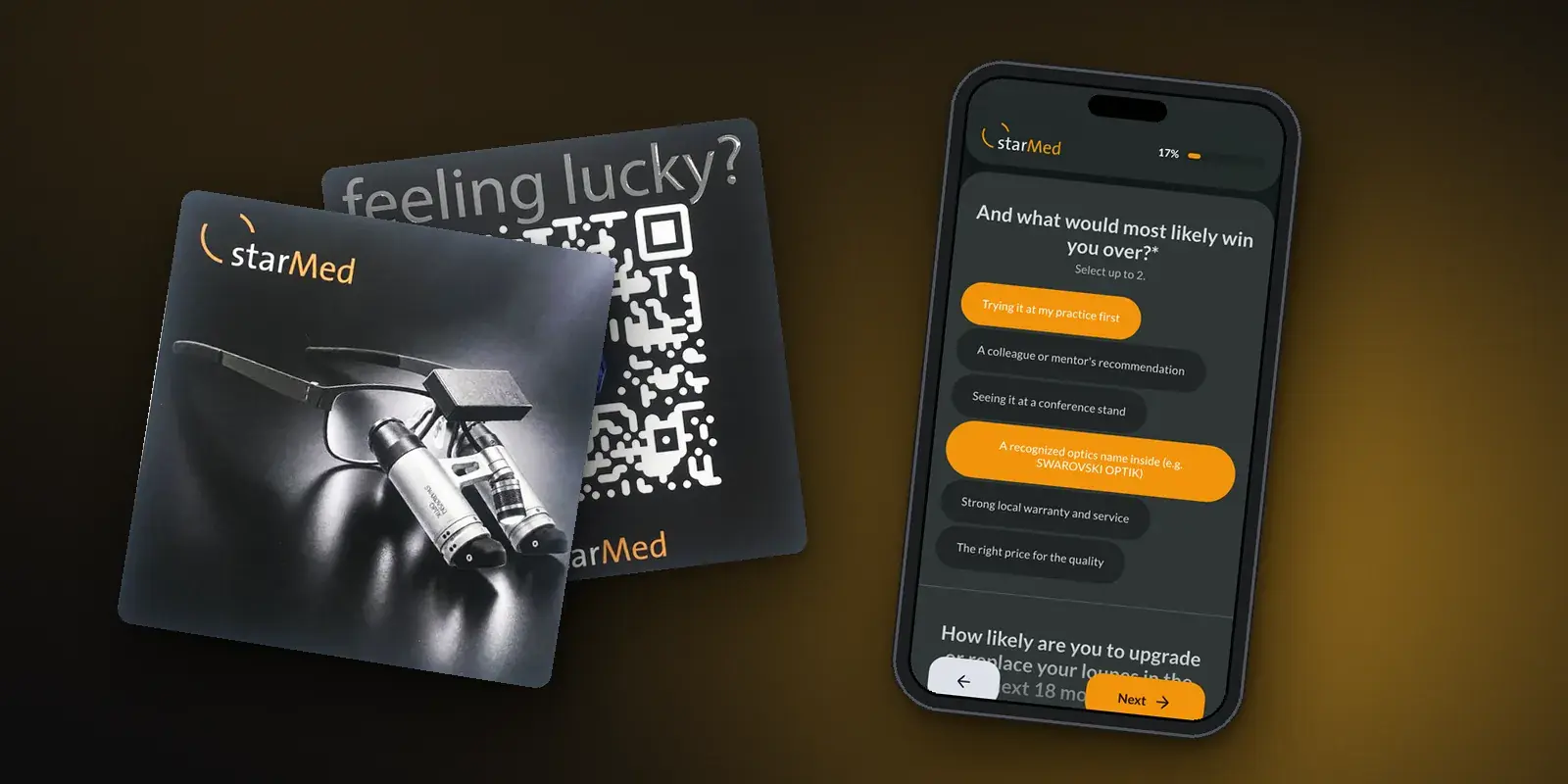
Geistlich Pharma Australia & New Zealand uses Screver for the market launch of starMed loupes and headlights – as market research and lead generation in one step. Before reps book fittings, Geistlich wants to know who uses loupes today, how old their current pair is, how likely they are to upgrade, what would make them choose a new pair – and who would welcome a fitting. Instead of a questionnaire, clinicians get a short brand experience behind a premium «feeling lucky?» QR card: it tells the starMed story, asks a few questions and ends with one clear ask – a personal loupe fitting with their Geistlich rep. The same experience goes out by email to the wider market.
The starMed launch experience at a glance
- Launch research and lead generation in one short brand experience
- A market map: who uses loupes today, how, and how old their current pair is
- Demand and timing: how likely clinicians are to upgrade – and when
- Switching drivers: what would prompt the next pair and what matters most when choosing
- Leads who raised their hand: a personal fitting or a no-obligation quote, scored Hot, Warm or Nurture and matched with a short read from the rep
- Two channels, one experience: a premium printed QR card handed over by Geistlich reps, and an email to dental professionals in Australia and New Zealand
- Open to the whole team – general dentists, specialists, hygienists, oral health therapists and dental students – with a prize draw from 13 October to 3 December 2026
The launch question: who is ready for a new pair, and what would make them choose starMed?
starMed makes loupes and headlights for dental and surgical work, made with Swarovski Optik, and Geistlich Pharma Australia & New Zealand brings them to clinicians in both countries. Loupes are a considered, personal purchase: clinicians keep a pair for years and rarely change brand without trying first. For a launch, that means two things matter most – when a clinician's current pair is due for replacement, and what would make them switch brand when it is. Geistlich wanted both answers early, together with the names of the clinicians who want to try starMed.
Geistlich's marketing team set the tone: no «survey». The piece had to feel like the product – light, sharp and premium – and be something a clinician is happy to open over a coffee.
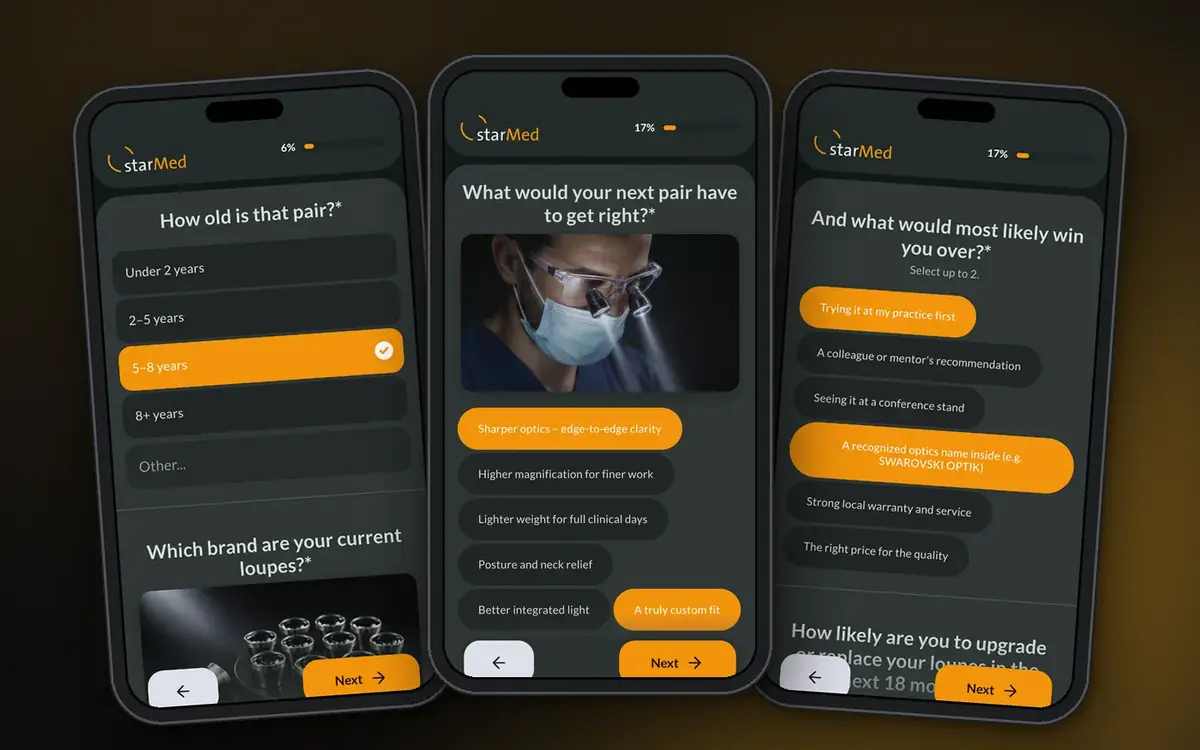
How the experience tests demand and finds clinicians ready to upgrade
- A card worth keeping: a premium printed card with starMed loupes on the front and «feeling lucky?» in silver, a QR code and a Swarovski crystal cow on the back. The rep hands it over and does not wait – the clinician opens it later, on their own phone, without an app or a login.
- The same experience by email: Geistlich sends the experience by email to reach clinicians beyond the rep visits, so the whole market feeds the same research.
- The story first: a short introduction to starMed – the optics, the custom fit, the magnification options and integrated lighting.
- A market profile: role and years in practice, and whether and how the clinician uses loupes today.
- Demand and timing: how old the current pair is and how likely the clinician is to upgrade.
- The switching drivers: what would prompt the next pair and what matters most when choosing – the reasons that would make a clinician move from the loupes they wear today.
- One clear ask: «Would you like your Geistlich rep to arrange a personal starMed fitting or a no-obligation quote?» A «yes» opens the contact fields and flags a hot lead.
- Contact and consent in Geistlich's approved wording, plus the prize draw for everyone who completes.
- Lead scoring: an older pair, a near-term upgrade plan and a fitting request make a Hot lead; clear interest on a longer horizon makes Warm; everyone else gets education, not rep time.
- The rep's own read: after a visit, the rep answers five quick questions – the real objection and the one lever most likely to win the clinician – matched to that clinician's own answers.
What the launch team gets
- A replacement calendar. Loupe age and upgrade plans show where demand will come from and when – who is likely to buy soon and whom to keep warm.
- Switching drivers it can act on. What clinicians say would prompt the next pair tells Geistlich which starMed strengths to lead with in each conversation.
- Leads who are already interested. Each fitting request reaches the rep with the clinician's role, current loupes, their age and what would prompt the next pair – so the rep brings the right magnification and fit.
- One picture across channels. Cards and email feed the same questions, so Geistlich can compare channels and roles.
- Brand awareness on the way. Every clinician who opens the card learns what starMed is – whether or not they answer.
What other MedTech and dental companies can learn from Geistlich
- Run launch research and lead generation in one step. The same short experience maps the market and collects the clinicians who want to try the product.
- Ask about the equipment they use today. The age of the current pair and the upgrade horizon show where demand is and when sales should call.
- Ask what would prompt the switch. The reasons to change tell sales which strengths to lead with.
- Make the product experience the ask. A personal fitting is both the incentive and the sales step.
- Combine the clinician's view with the rep's. Five rep questions catch what a clinician will not say in a form.
What's next
The starMed launch experience runs until 3 December 2026, and the prize draw follows on 4 December 2026. Geistlich and the Screver team then review the results together, and the Hot list goes straight to the reps.
About starMed and Geistlich Australia & New Zealand
starMed makes loupes and headlights for dental and surgical work, made with Swarovski Optik. Geistlich Pharma Australia & New Zealand, part of the Swiss Geistlich Pharma AG, offers starMed loupes and headlights to clinicians in Australia and New Zealand. Screver modules used: brand experience with skip logic, QR targets per channel, lead capture and consent, lead scoring, rep read form, dashboards and reports, delivered with the Capptoo team.
Frequently asked questions
How can one experience do market research and lead generation at the same time?
Every clinician answers the same short research questions – current loupes, their age, upgrade plans and what would prompt the next pair – so Geistlich gets a picture of the market. Contact details are asked only with consent, and a fitting request marks the clinicians who want a rep to visit.
How do the reps know whom to visit first?
Screver scores every clinician into Hot, Warm or Nurture and sends the reps a list with each clinician's role, current loupes and fitting request.
Can the same experience run on cards and by email?
Yes. Each channel gets its own QR code or link, so every answer is tagged with where it came from, while the questions stay the same.
Where can I read more?
See how Geistlich Australia & New Zealand turns congress booths and workshops into scored sales leads, the TRI® Dental Implants launch and Screver for MedTech and dental.