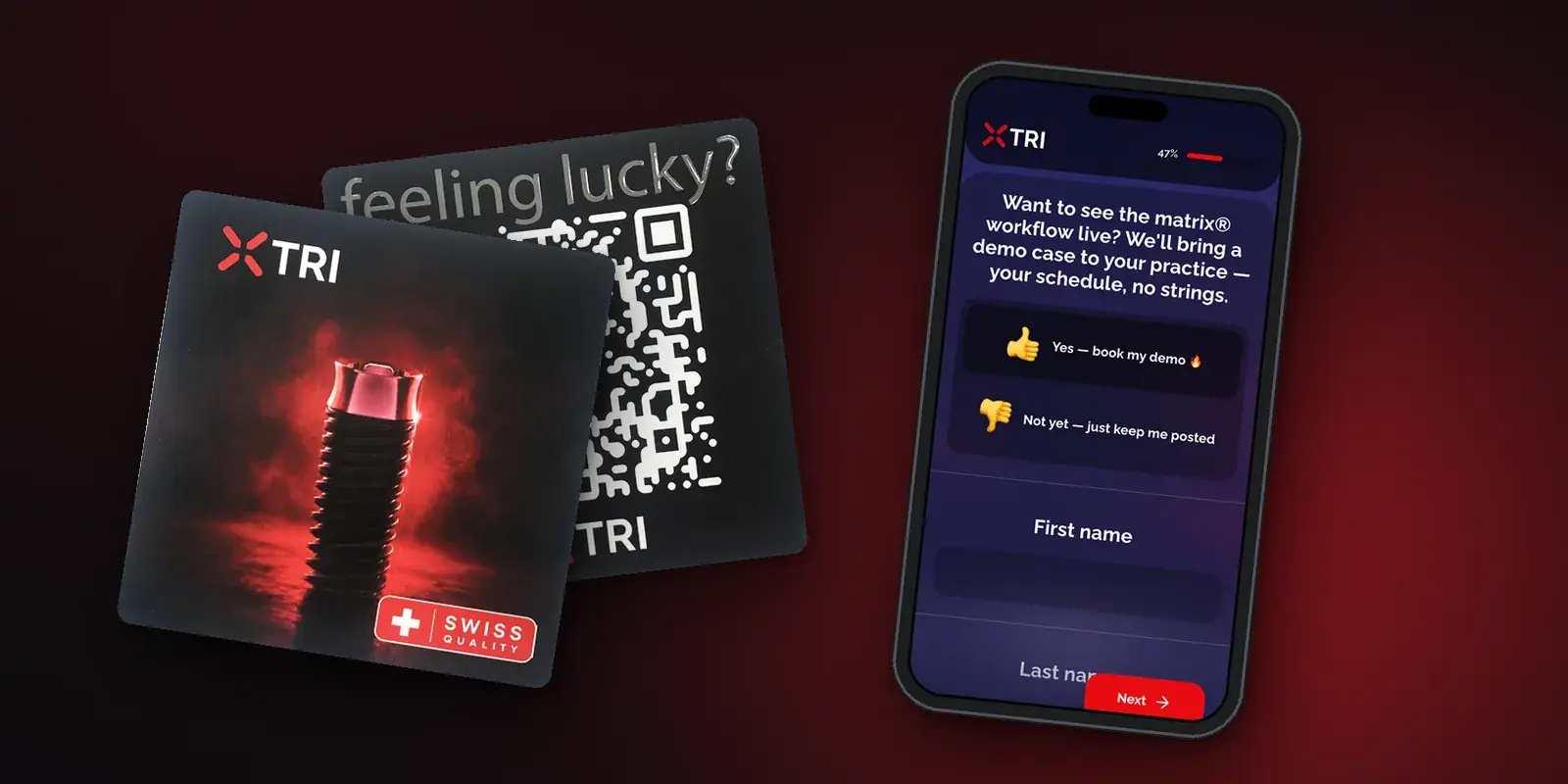
Geistlich Pharma Australia & New Zealand uses Screver for the market launch of TRI® Dental Implants – as market research and lead generation in one step. Before reps spend their time, Geistlich wants to know how much interest there is among implant clinicians, what keeps them with their current system, what would make them try TRI – and who already wants to see it. A 90-second brand experience answers all four: it tells the story of the abutment-free TRI matrix® system, asks a few sharp questions and ends with one clear ask – a demo case at the clinician's own practice. Reps hand it over on a premium QR card, and the same experience goes out by email to the wider market.
The TRI launch experience at a glance
- Launch research and lead generation in one – 90 seconds from the QR code to the last answer
- A demand test: how compelling the matrix® approach is for the way each clinician works
- Switching drivers: what would raise a clinician's confidence enough to try a new implant system
- A market map: specialty, placement volume and the digital steps already in the workflow
- Leads who raised their hand: a demo case at the practice, scored Hot, Warm or Park and matched with a short read from the rep
- Two channels, one experience: a premium printed QR card handed over by Geistlich reps, and an email to clinicians across Australia and New Zealand
The launch question: who will switch, and what would it take?
Geistlich Pharma Australia & New Zealand is the exclusive distributor of TRI® Dental Implants in Australia and New Zealand. TRI is a Swiss implant company, and its TRI matrix® system connects the digitally milled restoration directly to the implant, without an abutment. For implant clinicians, changing systems is a big step: they know their current system, their team is trained on it and their cases depend on it. A launch therefore needs more than awareness – Geistlich wanted to know early where the demand is, under which conditions clinicians would move, and whom reps should visit first.
Geistlich's marketing team was clear about the format: no «survey». Clinicians receive enough of those. The piece had to feel like TRI itself – technical, digital and confident – and be something a dentist is happy to read over a coffee.
How the experience tests demand and finds switchers
- A card worth keeping: a premium printed card with the TRI matrix® implant on the front and «feeling lucky?» with a QR code and the prize on the back. The rep hands it over and does not wait – the clinician opens it later, on their own phone, without an app or a login.
- The same experience by email: for clinicians a rep does not visit, Geistlich sends the experience by email, so the whole market feeds the same research.
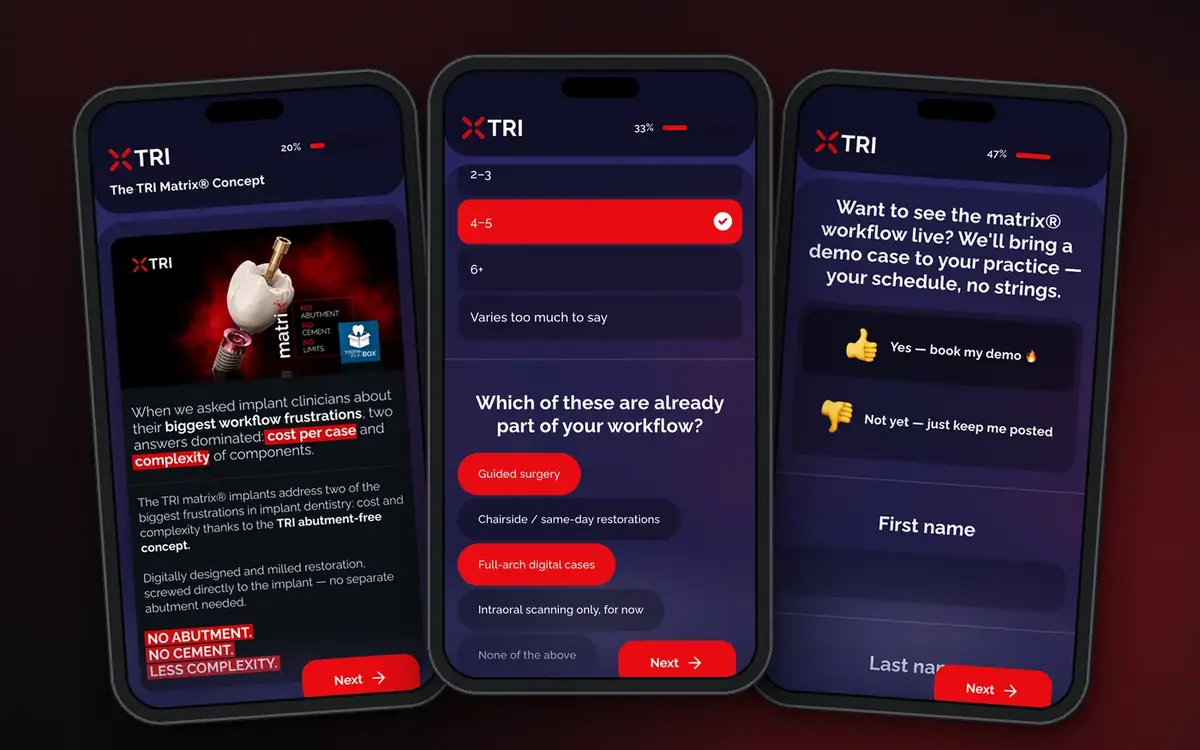
- The story first: a short introduction to TRI and the abutment-free matrix® workflow, building on what clinicians shared on the TRI workshop tour earlier in 2026.
- A demand check: how compelling the matrix® approach is for the way the clinician works today.
- The switching drivers: instead of «are you open to switching?», the experience asks what would raise their confidence in a new system – so Geistlich learns what to bring: data, a course invitation or a mentored first case.
- A market profile: specialty, whether the clinician places implants and how many, and which digital steps are already part of their workflow.
- One clear ask: «Want to see the matrix workflow live?» – a demo case at the practice, on the clinician's schedule. A «not yet» is still an opt-in contact, scored lower.
- Contact and consent in Geistlich's approved wording, plus the prize draw.
- Lead scoring: the reaction to the concept as the base, plus points for a demo request, placement volume and digital workflow – every clinician lands in Hot, Warm or Park.
- The rep's own read: after a visit, the rep answers five quick questions – the real objection and the one lever most likely to win the clinician – matched to that clinician's own answers.
What the launch team gets
- A read on demand by segment. Geistlich sees how the matrix® concept lands by specialty, placement volume and digital workflow – before scaling the launch.
- Switching drivers it can act on. The conditions clinicians name tell Geistlich what each conversation needs: clinical data, a course invitation or a mentored first case.
- Leads who are already interested. Every demo request reaches the rep with the clinician's specialty, volume and digital workflow, so the visit starts with the right case.
- One picture across channels. Cards and email feed the same questions, so Geistlich can compare channels and regions.
- Brand awareness on the way. Every clinician who opens the card learns what TRI matrix® is – whether or not they answer.
What other MedTech and dental companies can learn from Geistlich
- Run launch research and lead generation in one step. The same short experience maps the market and collects the clinicians who want to talk.
- Ask what would make them switch, not whether. «What would need to be true?» gives sales something to act on.
- Read demand by segment. Volume and digital workflow show where a new system fits first.
- Make one ask. A single, concrete next step – a demo at the practice – converts better than a list of options.
- Combine the clinician's view with the rep's. Five rep questions catch what a clinician will not say in a form.
What's next
The TRI launch experience runs in field visits and by email until early December 2026. Geistlich and the Screver team then review the results together, and the Hot list goes straight to the reps.
About TRI® Dental Implants and Geistlich Australia & New Zealand
TRI® Dental Implants is a Swiss implant company based in Hünenberg; its TRI matrix® system is designed for digital restorations that connect directly to the implant, without an abutment. Geistlich Pharma Australia & New Zealand, part of the Swiss Geistlich Pharma AG, is the exclusive distributor of TRI® Dental Implants in both countries. Screver modules used: brand experience with skip logic, QR targets per channel, lead capture and consent, lead scoring, rep read form, dashboards and reports, delivered with the Capptoo team.
Frequently asked questions
How can one experience do market research and lead generation at the same time?
Every clinician answers the same short research questions – reaction to the concept, current workflow and what would make them switch – so Geistlich gets a picture of the market. Contact details are asked only with consent, and a demo request marks the clinicians who want a rep to visit.
How do the reps know whom to visit first?
Screver scores every clinician into Hot, Warm or Park and sends the reps a list with each clinician's specialty, volume, digital workflow and demo request.
Can the same experience run on cards and by email?
Yes. Each channel gets its own QR code or link, so every answer is tagged with where it came from, while the questions stay the same.
Where can I read more?
See how Geistlich Australia & New Zealand turns congress booths and workshops into scored sales leads, the starMed loupes launch and Screver for MedTech and dental.